Burn injuries affect thousands of people daily. According to the American Burn Association, approximately 29,165 people require hospital admission for burns each year in the United States. The data shows a survival rate of 97.7% when proper treatment is administered. Understanding first aid for burns can make a critical difference in recovery outcomes.
Understanding Burns and First Aid Basics
Burns happen when skin comes into contact with heat, chemicals, electricity, or radiation. The World Health Organization reports that 73% of burns occur in the home. These injuries range from minor to severe. Knowing how to respond immediately saves tissue and reduces complications.
Types of Burn Injuries
First-degree burns affect only the top skin layer. Sunburn is a common example. The skin turns red but does not blister.
Second-degree burns damage both the outer and inner skin layers. Blistering is possible, and scarring may occur. Hot water spills often cause this type.
Third-degree burns penetrate all skin layers into deeper tissue. The skin appears leathery or charred with white, brown, or black patches. These require immediate medical attention.
What is the First Step in First Aid Care for Burns?
The first critical step is to stop the burning process immediately. This means removing clothing and extinguishing flames by allowing the patient to roll on the ground, applying a blanket, or using water.
Immediate Actions:
Call Us Now
Get the Best CPR Class in Tampa Today!
- Remove the person from the heat source
- Put out flames if clothing is burning
- Take off hot or burned clothing (unless stuck to skin)
- Remove jewelry, belts, and tight clothing quickly
Burns can swell quickly, so removing restrictive items prevents circulation problems.
What Are the First Aid Steps for a Burn?
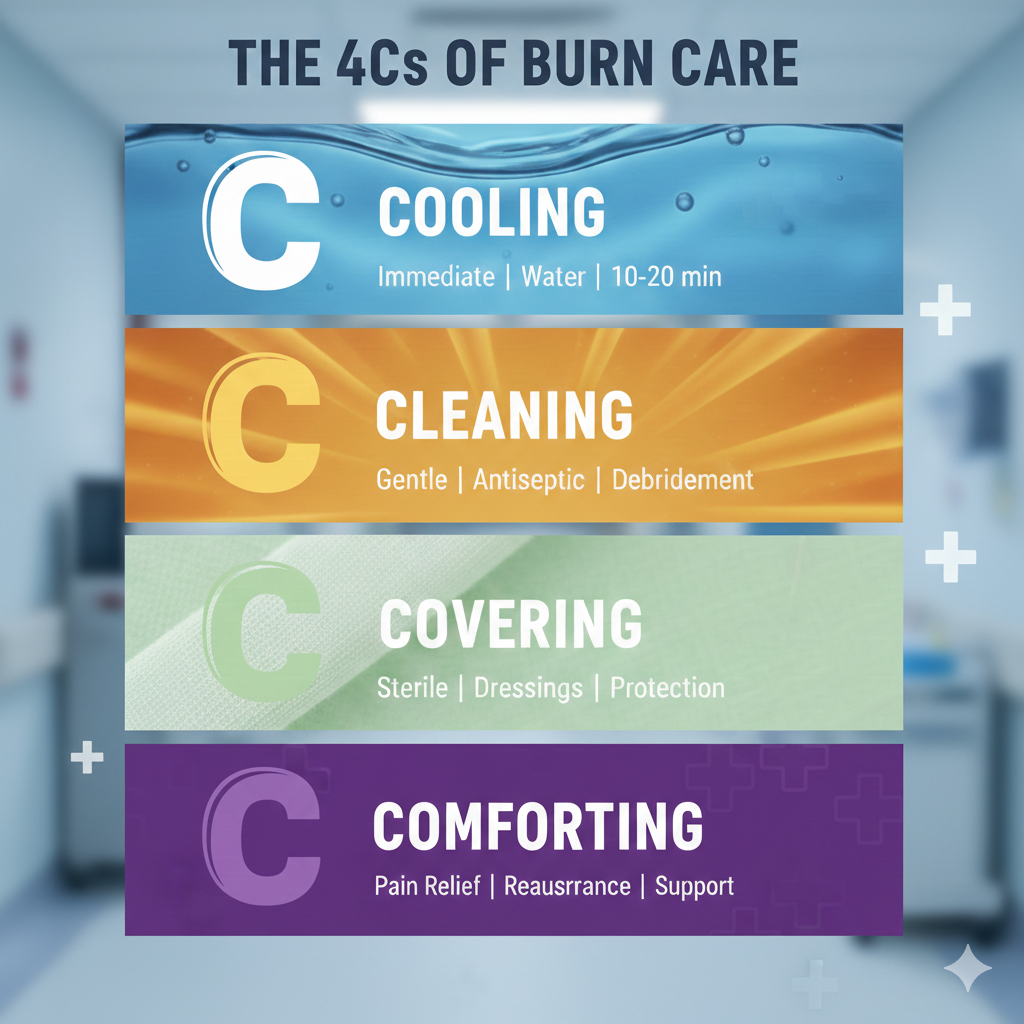
The 2024 American Heart Association and American Red Cross guidelines provide updated burn treatment protocols. The 4Cs of burn care—cooling, cleaning, covering, and comforting—offer a game plan for initial treatment.
Step 1: Cool the Burn
Apply cool running water to the affected area. Use cool running water to reduce the temperature of the burn. The World Health Organization recommends this crucial step.
Cooling Guidelines:
- Run cool water over the burn for 5 to 20 minutes by gently running tap water, dipping the burned area in water, or using a wet towel
- Use cool water, not ice or ice-cold water
- Hold burned skin under cool running water for 10 to 15 minutes until pain subsides for chemical burns
- Use compresses if running water is unavailable
Important Warning: Do not apply ice, as it can deepen the injury. Ice restricts blood flow and causes additional tissue damage.
Step 2: Clean the Wound
After cooling, gently clean the burn area. Use mild soap and water for minor burns. Pat dry with a clean cloth. Do not scrub or apply pressure to blistered skin.
Step 3: Cover the Burn
Cover with a sterile, non-adhesive bandage or a clean cloth. This protects against infection and keeps the area clean.
What Not to Apply:
- Do not apply paste, oil, haldi (turmeric), or raw cotton to the burn
- Do not apply butter, oil, lotions, or creams, especially if they contain fragrance
- Avoid home remedies that trap heat
Step 4: Comfort and Monitor
Keep the person comfortable. Monitor for signs of shock. Watch for increasing pain, swelling, or signs of infection.
What Is the First Aid Treatment for Burns?
First-aid treatment varies by burn severity. Minor burns can be treated at home. Serious burns require professional medical care.
For Minor Burns (First-Degree)
- Cool with running water for 10-15 minutes
- Clean gently with mild soap
- Apply aloe vera gel if desired
- Cover loosely with sterile gauze
- Take over-the-counter pain medication
For Moderate Burns (Second-Degree)
- Follow the cooling protocol immediately
- Do not open blisters until topical antimicrobials can be applied, such as by a health-care provider
- Cover with a clean, dry dressing
- Seek medical evaluation promptly
- Monitor for infection signs
For Severe Burns (Third-Degree)
Call emergency services immediately. Any burn believed to be worse than a first-degree burn should be seen by a medical professional immediately.
While waiting for help:
- Wrap the patient in a clean cloth or sheet and transport to the nearest appropriate facility for medical care
- Do not attempt to remove stuck clothing
- Keep the person warm to prevent shock
- Monitor breathing and consciousness
What First Aid Is Required for Burns?
Specific burn types need special consideration:
Chemical Burns First Aid
In chemical burns, remove or dilute the chemical agent by irrigating with large volumes of water. Brush off dry chemicals before flushing. Continue rinsing for at least 20 minutes.
Electrical Burns First Aid
Ensure the power source is off before approaching. Electrical burns often appear minor but cause deep tissue damage. Always seek medical evaluation.
Thermal Burns First Aid
These result from contact with flames, hot surfaces, or scalding liquids. Follow the standard 4Cs protocol. Severity determines next steps.
When to Seek Professional Medical Care
The American Burn Association recommends professional treatment for:
- Burns larger than three inches
- Burns on face, hands, feet, joints, or genitals
- Third-degree burns
- Chemical or electrical burns
- Burns showing infection signs (increased pain, redness, swelling, discharge)
- Burns in children or elderly individuals
Quick treatment reduces the risk of infection that could complicate recovery. Burn centers provide specialized care for severe cases.
Common First Aid Mistakes to Avoid
Do Not:
- Use ice or ice-cold water
- Apply butter, oils, or home remedies
- Break blisters
- Avoid prolonged cooling with water because it will lead to hypothermia
- Remove clothing stuck to burns
- Delay seeking help for serious burns
Burn Prevention and Safety
Prevention remains the most effective approach to burn injuries. The WHO emphasizes education and environmental modifications.
Home Safety Tips:
- Keep hot liquids away from counter edges
- Use the back burners when cooking
- Install smoke detectors
- Keep fire extinguishers accessible
- Supervise children around heat sources
- Test the bath water temperature before bathing children
Take Action: Get Certified in First Aid and CPR
Proper training makes a life-saving difference. When seconds count, knowing the correct first aid procedures for burns and other emergencies protects your loved ones and community.
CPR Classes Tampa offers comprehensive American Heart Association training that includes:
- Heartsaver First Aid and CPR
- BLS for Healthcare Providers
- ACLS and PALS courses
- Hands-on, stress-free learning environment
Don’t wait for an emergency to wish you knew what to do. Our AHA CPR classes in Tampa provide the skills and confidence you need. Visit CPR Classes Tampa today to enroll in our next Heartsaver First Aid and CPR course. All classes are taught by experienced instructors at our American Heart Association training site.
Your preparedness could save a life. Contact us now to schedule your certification course and join thousands who have gained these critical skills.
Frequently Asked Questions About Burns and First Aid
Q: How long should I cool a burn with water?
A: Apply cool water for 5 to 20 minutes for most burns. For chemical burns, continue rinsing for at least 20 minutes or until emergency services arrive. The cooling process helps reduce tissue damage and pain.
Q: Should I pop blisters on a burn?
A: No. Do not open blisters until topical antimicrobials can be applied by a health-care provider. Blisters provide natural protection against infection. Breaking them increases contamination risk and slows healing.
Q: When should I go to the emergency room for a burn?
A: Seek immediate emergency care for third-degree burns, burns larger than three inches, burns on sensitive areas (face, hands, feet, joints, genitals), chemical or electrical burns, and burns affecting children or elderly individuals. If you’re not sure what to do, don’t guess: go to your local urgent care or emergency room immediately.