Healthcare workers save lives every day. But the tools and environments that make that work possible also carry inherent biological risks. Among all occupational hazards in clinical settings, exposure to bloodborne pathogens remains one of the most serious and preventable.
Introduction
Bloodborne pathogen exposure is a daily reality in healthcare environments. Nurses, physicians, laboratory technicians, emergency responders, and support staff all face potential contact with infected blood and body fluids as part of routine care. The consequences of a single exposure event can be life-altering.
The Occupational Safety and Health Administration (OSHA) estimates that 5.6 million workers in healthcare and related fields are at risk of occupational exposure to bloodborne pathogens each year. This figure includes clinical providers, housekeeping staff, laundry workers, and others who encounter potentially infectious materials in the course of their duties. Understanding the specific nature of these risks — and the strategies that prevent them — is a professional obligation for every healthcare worker.
Understanding Bloodborne Pathogens
Bloodborne pathogens are microorganisms present in human blood and certain body fluids that cause disease when transmitted from one person to another. Transmission occurs when infected material enters the bloodstream through broken skin, mucous membrane contact, or direct inoculation.
The three pathogens of greatest occupational concern are:
- Human Immunodeficiency Virus (HIV) — Transmission risk following needlestick exposure from an HIV-positive source is approximately 0.3 percent
- Hepatitis B Virus (HBV) — Transmission risk following needlestick exposure ranges from 6 to 30 percent, depending on the source patient’s viral load; HBV can survive on surfaces for up to seven days
- Hepatitis C Virus (HCV) — Transmission risk following needlestick exposure averages approximately 1.8 percent; no post-exposure prophylaxis currently exists
HBV is significantly more infectious than HIV or HCV in occupational settings. Vaccination against HBV is effective and available, and OSHA requires employers to offer it free of charge to all at-risk workers.
Call Us Now
Get the Best CPR Class in Tampa Today!
The #1 Risk: Needlestick and Sharp Injuries
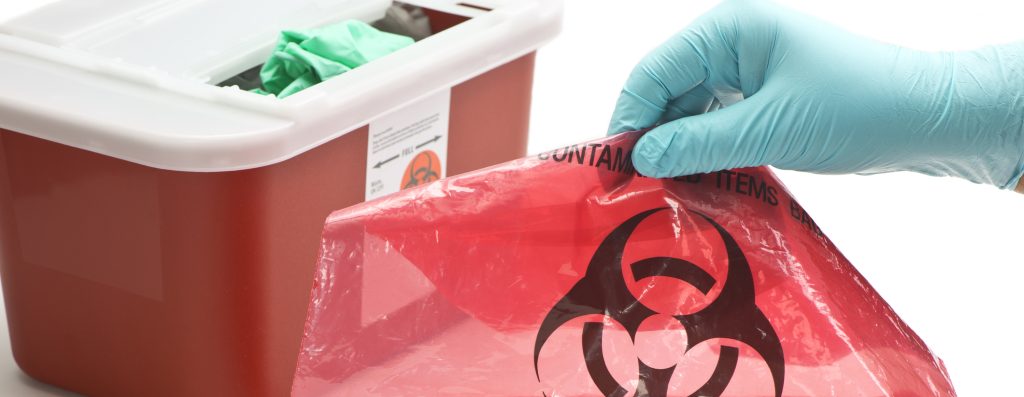
The most common and significant route of bloodborne pathogen exposure for healthcare workers is needlestick and sharp object injuries. These occur when a contaminated needle, scalpel, lancet, or broken glass punctures the skin. The CDC estimates that approximately 385,000 needlestick and sharps injuries occur among hospital-based healthcare workers in the United States every year.
Needlestick injuries are particularly serious because they deliver contaminated blood directly into tissue. The depth of penetration, volume of blood involved, and viral load of the source patient all influence transmission probability.
The highest-risk situations for sharps injuries include:
- Recapping used needles — One of the most preventable causes; two-handed recapping is prohibited under OSHA standards
- Overfilled sharps containers — Attempting to deposit sharps into a container that has exceeded safe capacity
- Passing sharps between providers — Direct hand-to-hand transfer during operative or bedside procedures
- Patient movement during procedures — Sudden motion during injection or blood draw, causing needle deviation
- Improper disposal — Needles left on surfaces, in bed linens, or placed in non-sharps waste containers
Underreporting remains a serious problem. Studies suggest only 40 to 60 percent of sharps injuries are formally reported. Barriers include time constraints, fear of stigma, and the belief that the source patient is low-risk. Underreporting prevents institutions from identifying hazards and implementing targeted prevention measures.
Other Significant Exposure Risks
While sharp injuries represent the most common exposure pathway, other mechanisms carry meaningful transmission risk and must be understood as part of a complete prevention approach.
Mucous membrane exposure occurs when infectious blood or body fluids contact the eyes, nose, or mouth. Splashes during wound irrigation, suctioning, and surgical procedures are common causes. Face shields and eye protection are required whenever splash risk is anticipated.
Non-intact skin contact provides a direct entry point for pathogens. Cuts, abrasions, dermatitis, and chronically chapped hands elevate risk significantly during ungloved or inadequately gloved patient contact.
Contaminated surface contact is particularly relevant for HBV, which survives on environmental surfaces for days. Shared equipment, such as glucometers, blood pressure cuffs, and bedrails that are not properly decontaminated between patients, creates ongoing low-level exposure risk.
Prevention Strategies and Best Practices
Bloodborne pathogen exposure is largely preventable. OSHA’s Bloodborne Pathogens Standard mandates a layered framework of engineering controls, work practice controls, and personal protective equipment designed to reduce exposure to the lowest feasible level.
Engineering controls eliminate hazards at the source and represent the most effective prevention layer:
- Safety-engineered sharps devices with retractable or self-blunting mechanisms
- Needleless IV systems that eliminate needle use for medication delivery
- Puncture-resistant sharps containers are placed at the point of use
- Biological safety cabinets for laboratory specimen processing
Work practice controls modify how tasks are performed:
- Single-handed needle recapping technique when recapping is unavoidable
- Immediate disposal of used sharps in the nearest available container
- No bending, breaking, or manual manipulation of used needles
- Consistent hand hygiene before and after all patient contact
Personal protective equipment provides physical barrier protection:
- Gloves for all contact with blood, body fluids, and non-intact skin
- Face shields and eye protection when splash is anticipated
- Fluid-resistant gowns during procedures likely to generate blood or fluid exposure
HBV vaccination remains the single most effective preventive measure against one of the three primary occupational pathogens. All at-risk workers should confirm their vaccination status and post-vaccination immunity.
What to Do After an Exposure Incident
An immediate, structured response following exposure directly influences both the transmission probability and access to effective treatment.
Immediate first aid:
- Wash needlestick wounds thoroughly with soap and water for several minutes
- Flush mucous membrane exposures with clean water or saline immediately
- Do not squeeze the wound to express blood — this does not reduce risk
Reporting and medical evaluation must occur as soon as possible. For HIV exposure, post-exposure prophylaxis (PEP) is most effective when initiated within two hours and must be started within 72 hours. A 28-day course of antiretroviral medication significantly reduces HIV transmission risk when taken as directed.
Source patient testing for HIV, HBV, and HCV guides prophylaxis decisions. HBV immune globulin and vaccination status determine the post-exposure management pathway for hepatitis B. There is no prophylaxis for HCV, making baseline and follow-up testing the standard approach.
All exposure incidents must be formally documented. OSHA requires employers to maintain a sharps injury log and provide a confidential medical evaluation at no cost to the worker.
Training and Compliance Requirements
OSHA mandates annual bloodborne pathogen training for all workers with occupational exposure risk. Training must be interactive, site-specific, and provided by a knowledgeable trainer. Required content includes:
- Epidemiology and transmission of HIV, HBV, and HCV
- The facility’s written exposure control plan and how to access it
- Proper use of engineering controls, PPE, and safety devices
- Step-by-step post-exposure reporting and medical follow-up procedures
- Hepatitis B vaccination availability and the declination process
Training must be provided at initial assignment, annually thereafter, and whenever new exposure risks are introduced. Employers are also required to involve frontline workers in the evaluation and selection of safety-engineered sharps devices. Workers who perform procedures are best positioned to assess whether a safety device functions effectively in clinical practice.
3 FAQs: Most Common Risk of Exposure to Bloodborne Pathogens for Healthcare Workers?
Q1: What is the most common way healthcare workers are exposed to bloodborne pathogens?
The most common risk is needlestick and sharp injuries. These occur when a healthcare worker is accidentally punctured by a used needle, scalpel, or other sharp instrument contaminated with a patient’s blood or bodily fluids. This type of exposure can transmit serious infections such as HIV, Hepatitis B, and Hepatitis C, making proper sharps handling and disposal an essential part of daily clinical practice.
Q2: Are all healthcare workers equally at risk for bloodborne pathogen exposure?
No — risk levels vary depending on role and setting. Nurses, phlebotomists, surgeons, laboratory technicians, and emergency responders tend to face the highest exposure risk due to frequent direct contact with blood and sharp instruments. However, any healthcare worker — including support and cleaning staff — can be at risk if proper safety protocols and personal protective equipment (PPE) are not consistently used.
Q3: What steps can healthcare workers take to reduce their risk of exposure?
Prevention starts with training and strict adherence to Standard Precautions. Key measures include using safety-engineered sharps devices, wearing appropriate PPE (gloves, masks, face shields), properly disposing of sharps in puncture-resistant containers, receiving the Hepatitis B vaccine, and knowing the immediate steps to take following an exposure incident. Regular, hands-on training ensures these practices become second nature in high-pressure environments.
Conclusion
Bloodborne pathogen exposure is a serious and ongoing concern for healthcare workers across every specialty. Needlestick injuries and contact with infected blood or bodily fluids can have life-altering consequences — but the good news is that the majority of exposures are preventable. With the right knowledge, equipment, and training, healthcare professionals can confidently protect themselves and their patients every single day.
Call to Action
Your safety starts with the right training. At CPR Classes Tampa — an American Heart Association authorized training site — we make certification straightforward, stress-free, and hands-on. Whether you’re looking to get certified for the first time or renew your credentials, we’ve got you covered.
👉 Register for a BLS class in Tampa today and gain the life-saving skills and safety knowledge every healthcare professional needs. Trust CPR Classes Tampa to prepare you with confidence — because being ready isn’t optional, it’s essential.