It happens in seconds. A conversation stops mid-sentence, a person’s eyes widen, and their hands instinctively move to their throat. What began as a normal meal or quiet moment suddenly turns into a choking emergency. Severe airway obstruction is one of the most frightening medical emergencies because it gives very little time to react. Without fast recognition and immediate action, the brain can be deprived of oxygen, leading to serious injury or death. Understanding how airway obstruction occurs, how to recognize it, and how to respond can truly save a life. In this article, you will learn what an airway obstruction is, how to identify severe cases, the most common causes, and why proper training is essential for confident emergency response.
What is an Airway Obstruction?
An airway obstruction occurs when something blocks the flow of air into or out of the lungs. To understand why this is so dangerous, it helps to know a bit about basic anatomy. Air enters through the mouth and nose, passes through the throat, and moves down the trachea into the lungs. When this pathway is blocked, oxygen cannot reach the lungs, and carbon dioxide cannot be expelled. Because the brain is extremely sensitive to oxygen deprivation, even a short interruption in breathing can become life-threatening. This is why airway obstructions are considered true medical emergencies that require immediate attention.
Types of Airway Obstruction
There are several ways to categorize airway obstructions, and each type carries different risks. A partial obstruction allows some air to pass, often producing coughing, wheezing, or noisy breathing. A complete obstruction, however, blocks airflow entirely and is far more dangerous. Obstructions can also be classified as upper or lower airway obstructions. Upper airway obstructions occur in the throat or larynx and are most commonly associated with choking, while lower airway obstructions affect the trachea or bronchi and may be linked to conditions like asthma. Additionally, obstructions may be acute, happening suddenly, or chronic, developing over time due to illness or structural issues.
What are the Signs of Airway Obstruction?
Recognizing the signs of airway obstruction is crucial for timely intervention. One of the most well-known indicators is the universal distress signal, where a person clutches their throat with one or both hands. Physical signs may include difficulty breathing, gagging, high-pitched sounds, or an inability to speak. Behavioral indicators can also be telling, such as panic, agitation, or sudden silence. These cues are the body’s way of signaling that something is very wrong, and they should never be ignored.
Signs of Severe Airway Obstruction
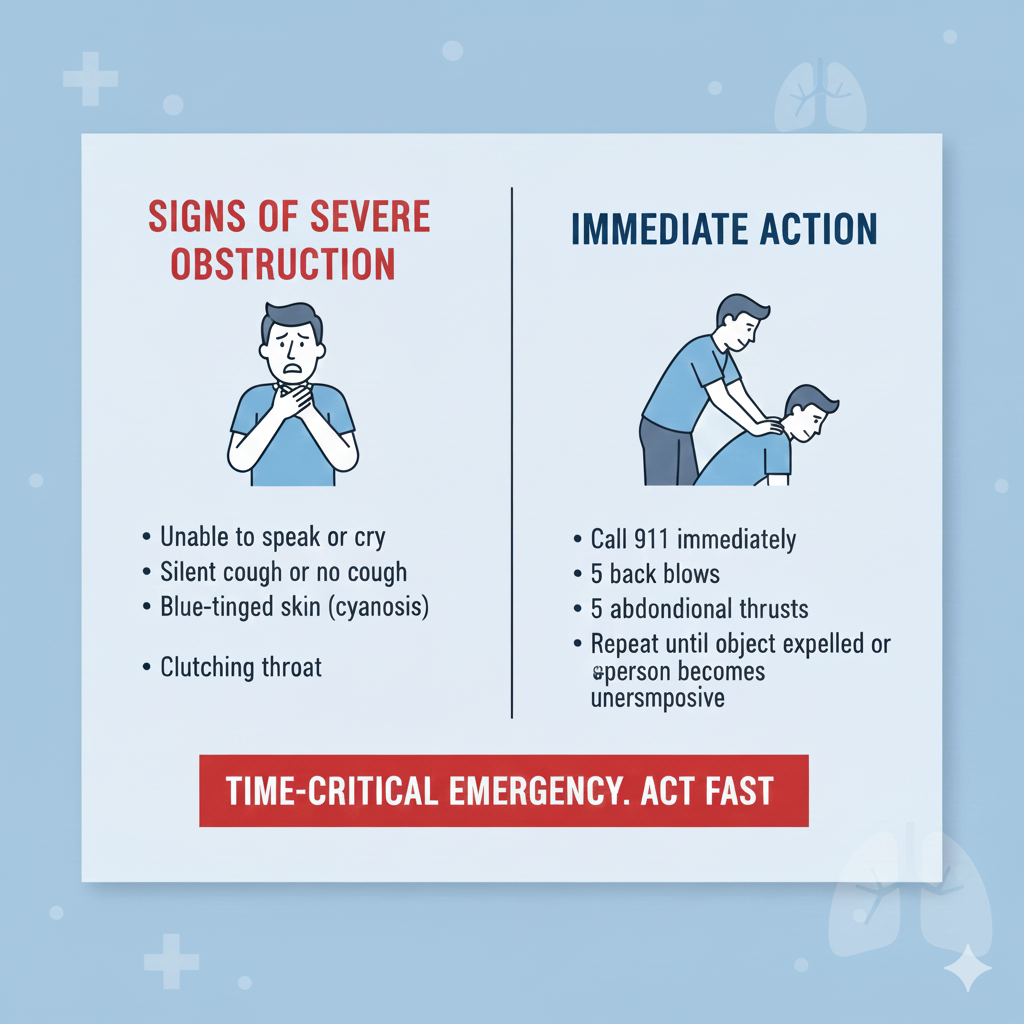
Severe airway obstruction presents with more critical warning signs that demand immediate action. In these cases, the person may be unable to cough, speak, or breathe at all. Their lips or fingertips may turn blue due to a lack of oxygen, and they may lose consciousness if the blockage is not cleared quickly. Understanding the difference between mild and severe obstruction is essential. With a mild obstruction, coughing is often effective and should be encouraged. With a severe obstruction, coughing is ineffective or impossible, and active intervention is required. A helpful guideline is the “can’t cough, can’t breathe” rule. If a person cannot cough or breathe, they are experiencing a complete airway blockage and need immediate help.
Complete airway blockage is especially dangerous because the body has no way to compensate. Unlike other emergencies where there may be time to wait for professional help, severe choking requires instant action from bystanders. This is why learning how to respond properly is so important. Techniques such as abdominal thrusts or back blows are designed to create enough pressure to expel the object blocking the airway, restoring airflow and preventing loss of consciousness.
Call Us Now
Get the Best CPR Class in Tampa Today!
Most Common Causes of Airway Obstruction
The causes of airway obstruction vary by age group and circumstance. In adults, food is the most common cause, particularly meat or large bites that are not chewed thoroughly. Alcohol consumption, dentures, and eating too quickly can increase the risk. In children and infants, airway obstruction often involves small objects like toys, coins, or pieces of food such as grapes or nuts. Other contributing factors include swelling from allergic reactions, infections, trauma, or medical conditions that affect muscle control or swallowing.
Prevention Strategies
Prevention plays a key role in reducing the risk of airway obstruction. At home and in public, simple habits such as chewing food thoroughly, avoiding talking while eating, and keeping small objects away from children can make a significant difference. For high-risk populations, such as older adults or individuals with neurological conditions, modified diets and mealtime supervision may be necessary. Learning about choking hazards and safe practices can be reinforced through related topics like childproofing your home or senior safety planning.
Emergency Response to Severe Airway Obstruction
When severe airway obstruction occurs, immediate action is critical. If a person is choking and unable to breathe, call for emergency help right away while beginning appropriate choking response techniques. If the person becomes unresponsive, CPR should be started immediately. It is equally important to know what not to do. Blind finger sweeps should be avoided, as they can push the object deeper into the airway. Giving food or drink during a choking episode is also dangerous and should never be attempted.
When to Seek Medical Attention
Medical attention should be sought after a choking episode, even if the obstruction appears to have been resolved. Objects can cause injury to the airway, and small fragments may remain unnoticed. In some cases, symptoms such as coughing, chest pain, or hoarseness can develop later. An emergency department visit allows healthcare providers to ensure the airway is clear and assess for complications.
The Importance of Training and Certification
Training and certification are vital for anyone who wants to be prepared for airway emergencies. Knowing CPR and choking response techniques builds confidence and reduces hesitation during critical moments. Professional training programs teach how to recognize airway obstruction, perform life-saving maneuvers correctly, and adapt responses for adults, children, and infants. These skills often complement broader emergency preparedness topics, creating a well-rounded foundation for responding to medical crises.
Severe airway obstruction is a life-threatening emergency that requires fast recognition and decisive action. Understanding the signs, causes, and appropriate responses can mean the difference between life and death. By learning to distinguish between mild and severe obstruction and knowing when to intervene, you equip yourself with the ability to act when seconds matter most. The most powerful step you can take is to get trained. Education and practice transform fear into confidence, ensuring that when a choking emergency happens, you are ready to respond and potentially save a life.
FAQs About Severe Airway Obstruction
- What are the warning signs of severe airway obstruction?
Severe airway obstruction presents with distinctive symptoms that require immediate recognition. The universal choking sign—hands clutched to the throat—is the most recognizable indicator. Other critical signs include inability to speak or cry out, silent coughing or no cough at all, difficulty breathing with high-pitched sounds, and skin turning blue or gray (cyanosis), particularly around the lips and fingernails. The person may appear panicked and may quickly lose consciousness if the obstruction isn’t cleared. Unlike partial obstruction, where the person can still cough forcefully, severe obstruction leaves the victim unable to move air effectively, making every second critical.
- How should I respond if someone is experiencing severe airway obstruction?
Your response depends on whether the person is conscious or unconscious. For a conscious adult or child, perform the Heimlich maneuver (abdominal thrusts) by standing behind them, placing your fist above their navel, and delivering quick upward thrusts until the object dislodges. For infants under one year, use back blows and chest thrusts instead. If the person becomes unconscious, carefully lower them to the ground and begin CPR immediately, checking the mouth for visible objects before each rescue breath. Call 911 right away if you haven’t already. Never perform blind finger sweeps in the mouth, as this can push the obstruction deeper. Proper training in these techniques is essential for confident, effective action during these life-threatening emergencies.
- Can severe airway obstruction be prevented?
While not all cases are preventable, many airway obstructions can be avoided through simple precautions. Cut food into small, manageable pieces, especially for young children and elderly individuals. Avoid talking, laughing, or engaging in physical activity while eating. Supervise young children during meals and keep small objects like coins, buttons, and small toys out of reach. Chew food thoroughly before swallowing and avoid consuming alcohol excessively before eating, as it impairs swallowing reflexes. For those with medical conditions affecting swallowing, work with healthcare providers on safe eating strategies. Creating awareness about these prevention methods within families and communities significantly reduces the risk of choking emergencies.
Conclusion and Call to Action
Severe airway obstruction is a medical emergency that can progress from a manageable situation to a fatal outcome in minutes. Understanding the signs, knowing how to respond, and taking preventive measures can mean the difference between life and death. However, reading about these techniques is not enough—hands-on practice and proper certification ensure you’ll respond effectively when seconds count.
Don’t wait until an emergency strikes to wish you were prepared. CPR Classes Tampa, an American Heart Association training site, offers comprehensive, hands-on training that equips you with the skills and confidence to save lives. Whether you need BLS classes in Tampa for your healthcare career or want CPR certification in Tampa to protect your family and community, our stress-free courses provide the practical experience you need to act decisively during airway obstruction emergencies and other life-threatening situations.
Our experienced instructors offer initial certifications and renewals in BLS for Healthcare Providers, ACLS, PALS, and CPR and First Aid courses—all designed to ensure you’re ready when it matters most. Take control of your ability to respond in critical moments. Contact CPR Classes Tampa today and invest in the training that could save someone’s life tomorrow.